

Skip to content
January 3, 2026
  • Facebook
  • Linkedin
  • Instagram
  • Twitter
  • Youtube

  • Home
    • About Us
    • Contact Us
    • Advertise
    • Join Us
  • News
    • Local News
      • OhioColumbus, Dayton, Cincinnatti, Cleveland, Toledo and Youngstown.
        • Columbus, OH
        • Dayton, OH
      • Louisville, KY
      • TennesseeNashville, Middle, TN and surrounding areas.
        • Nashville, TN
      • LouisianaBaton Rouge, New Orleans and surrounding areas.
        • Baton Rouge, LA
        • New Orleans, LA
      • St. Louis, MO
      • Las Vegas, NV
      • Houston, TX
      • Atlanta, GALocal news from Atlanta, GA, and surrounding areas.
    • National
    • Global
    • Politics
    • Diversity & Inclusion
  • Culture
    • Family Trends
    • Savvy Seniors
    • Young & Trendy
    • Education
      • HBCU News
    • Kingdom NewsSpread the gospel and empower the Kingdom of God.
  • Lifestyle
    • Health
      • Fit and Trendy
    • Beauty Trends
    • Style Trends
    • Tech Trends
    • Sports
    • CarsAutomotive News and Updates
  • Money and Wealth
    • Business
      • LOCAL
      • BIz Spotlights
    • Consumer News
    • C.E.O.Careers, Entrepreneurs and Opportunities
      • Jobs
  • A&E
    • Cover2Cover
  • Food & Dining
    • Recipes
  • Travel Trends
  • Events
    • EVENT SPOTLIGHTS
Watch UTS TV Live
  • Home
  • Health
  • Your body has an internal clock that dictates when you eat, sleep and might have a heart attack – all based on time of day
  • Health

Your body has an internal clock that dictates when you eat, sleep and might have a heart attack – all based on time of day

Sharon S Gordon January 3, 2023
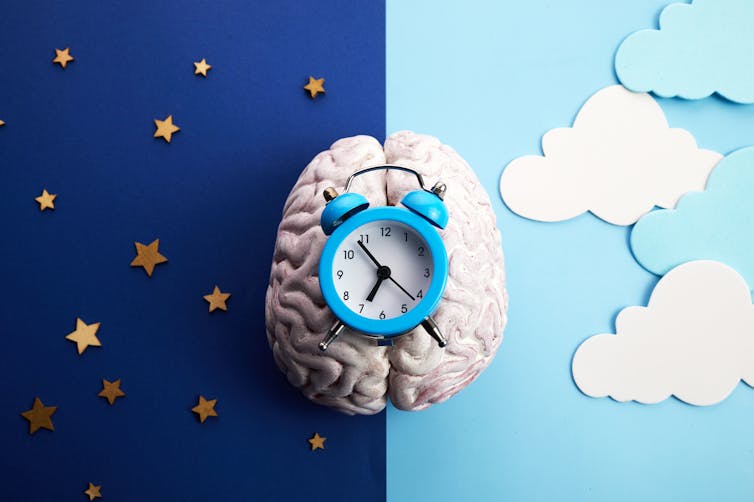
Syncing your circadian rhythm to a natural light-dark cycle could improve your health and well-being. nambitomo/iStock via Getty Images Plus
Shogo Sato, Texas A&M University

Anyone who has suffered from jet lag or struggled after turning the clock forward or back an hour for daylight saving time knows all about what researchers call your biological clock, or circadian rhythm – the “master pacemaker” that synchronizes how your body responds to the passing of one day to the next.

This “clock” is made up of about 20,000 neurons in the hypothalamus, the area near the center of the brain that coordinates your body’s unconscious functions, like breathing and blood pressure. Humans aren’t the only beings that have an internal clock system: All vertebrates – or mammals, birds, reptiles, amphibians and fish – have biological clocks, as do plants, fungi and bacteria. Biological clocks are why cats are most active at dawn and dusk, and why flowers bloom at certain times of day.

Circadian rhythms are also essential to health and well-being. They govern your body’s physical, mental and behavioral changes over each 24-hour cycle in response to environmental cues like light and food. They’re why more heart attacks and strokes occur early in the morning. They’re also why mice that are missing their biological clocks age faster and have shorter lifespans, and people with a mutation in their circadian clock genes have abnormal sleep patterns. Chronic misalignment of your circadian rhythm with external cues, as seen in night-shift workers, can lead to a wide range of physical and mental disorders, including obesity, Type 2 diabetes, cancer and cardiovascular diseases.

In short, there is ample evidence that your biological clock is critical to your health. And chronobiologists like me are studying how the day-night cycle affects your body to better understand how you can modify your behaviors to use your internal clock to your advantage.

Your body has an internal clock that helps keep it in working order.

How biological rhythms affect your health

Your biological clock affects your health by regulating your sleep-wake cycles and fluctuations in blood pressure and body temperature. It does this primarily by syncing your endocrine system to environmental light-dark cycles so that certain hormones are released in certain amounts at certain times of day.

The pineal grand in your brain, for example, produces melatonin, a hormone that helps regulate sleep in response to darkness. Doctors advise reducing exposure to artificial blue light from electronic devices before bedtime because it can disrupt melatonin secretion and sleep quality.

Your circadian rhythm also affects your metabolism. Among other things, sleep helps you regulate leptin, a hormone that controls appetite. Your leptin levels fluctuate throughout the day according to a rhythm set by your circadian clock. Insufficient or irregular sleep can disrupt leptin production, which can make us hungrier and lead to weight gain.
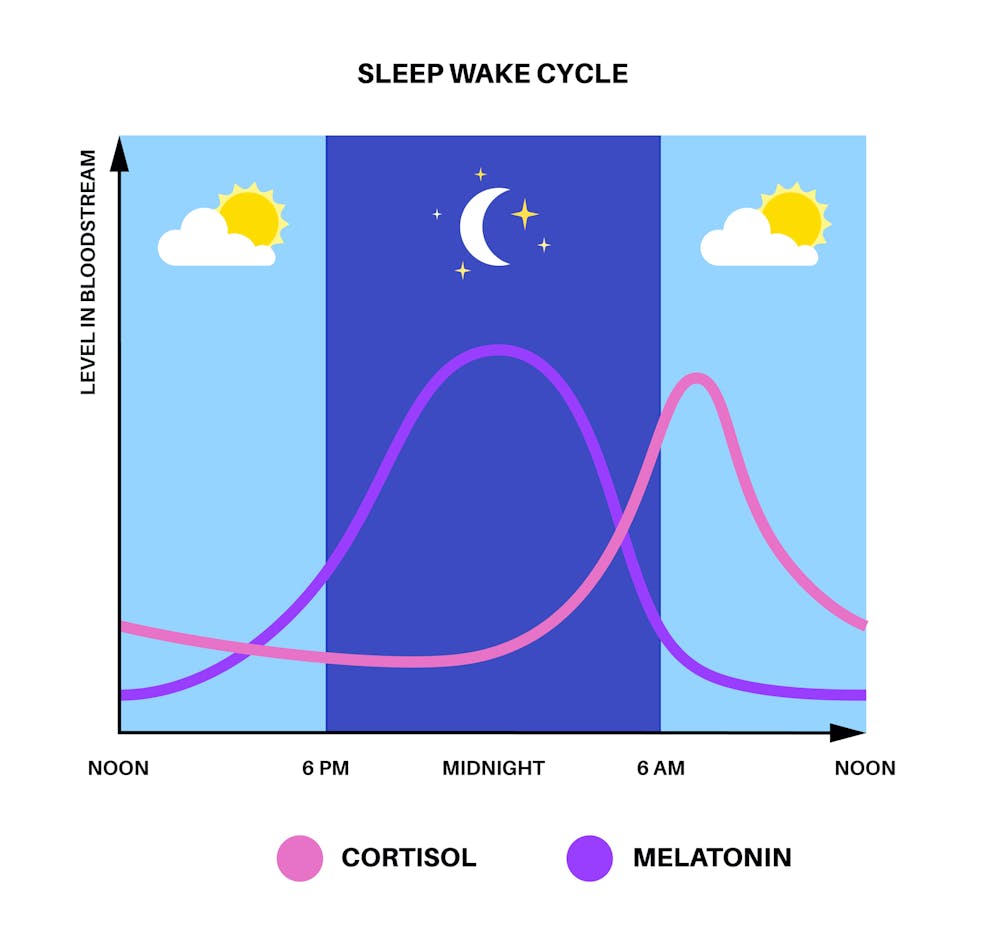
Chart showing cortisol and melatonin levels fluctuating over the course of the day, with cortisol levels peaking at around 6 AM and melatonin peaking at around midnight
Your hormones fluctuate rhythmically over the course of the day. The stress hormone cortisol typically peaks in the morning, while the sleep hormone melatonin typically peaks in the night. Pikovit44/iStock via Getty Images Plus

In recent years, researchers have discovered even more ways your circadian clock can affect your health. For example, there is now research suggesting that eating at set times of day, or time-restricted feeding, can prevent obesity and metabolic diseases. Depression and other mood disorders may also be linked to dysfunctional circadian control that lead to changes in how your genes are expressed.

The time of day when you take your medicine can also affect how well it works and how severe any side effects might be. Likewise, your biological clock is a potential target for cancer chemotherapies and anti-obesity treatments.

And finally, even your personality might be shaped by whether your internal clock make you a “morning person” or a “night person.”

Getting the most out of exercise

Circadian clocks also provide a potential answer to when is the best time of day to maximize the benefits of physical exercise.

To study this, my colleagues and I collected blood and tissue samples from the brains, hearts, muscles, livers and fat of mice that exercised either before breakfast in the early morning or after dinner in the late evening. We used a tool called a mass spectrometer to detect approximately 600 to 900 molecules each organ produced. These metabolites served as real-time snapshots of how the mice responded to exercise at specific times of day.

We stitched these snapshots together to create a map of how exercise in the morning versus evening affected each of the mice’s different organ systems – what we called an atlas of exercise metabolism.
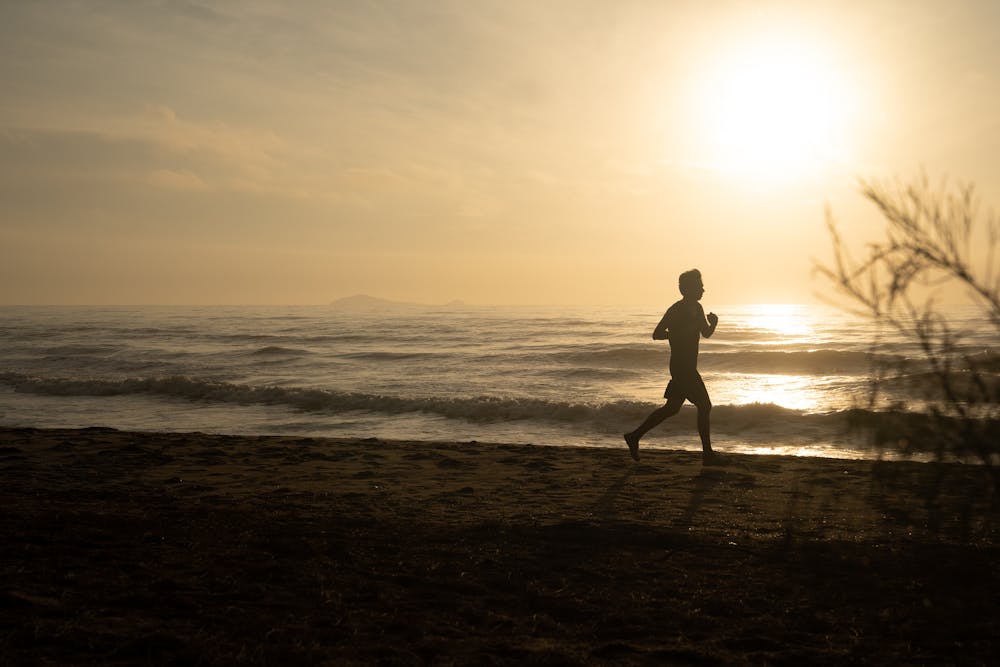
Silhouette of person running by the sea at sunrise
The best time of day to exercise might be the time when you feel you perform best. Anuruk Charoenamornrat/EyeEm via Getty Images

Using this atlas, we saw that time of day affects how each organ uses energy during exercise. For instance, we found that early morning exercise reduced blood glucose levels more than late evening exercise. Exercise in the late evening, however, allowed the mice to benefit from energy they stored from their meals and increased their endurance.

Of course, mice and humans have many differences along with their similarities. For one, mice are more active at night than during the day. Still, we believe that our findings could help researchers better understand how exercise affects your health and, if timed appropriately, can be optimized based on time of day to meet your personal health goals.

Getting along with your biological clock

I believe that the field of chronobiology is growing, and we will produce even more research providing practical applications and insights into health and well-being in the future.

In my own work, for example, a better understanding of how exercising at different times of day affects your body could help tailor exercise plans to maximize specific benefits for patients with obesity, Type 2 diabetes and other diseases.

There is still much to learn about how your circadian clock works. But in the meantime, there are some tried and true ways people can synchronize their internal clocks for better health. These include regular exposure to sunlight to trigger the endocrine system to produce vitamin D, staying active during the day so you fall asleep more easily at night and avoiding caffeine and reducing your exposure to artificial light before bedtime.

Shogo Sato, Assistant Professor of Biology, Texas A&M University

This article is republished from The Conversation under a Creative Commons license. Read the original article.

About Author

Sharon S Gordon

Sharon S. Gordon is the CEO and Founder of Urban Trendsetters News Magazine and Media.

See author's posts

Post navigation

Previous Calling Deion Sanders a sellout ignores the growing role of clout-chasing in college sports
Next Afrobeats in 2022: global mobility, election songs, placemaking albums – and Tems

Related Stories

Getting Paid to Care for Your Loved One: How Entyre Care Is Helping Families Turn Care Into Compensation
  • Health
  • National
  • News
  • Savvy Seniors

Getting Paid to Care for Your Loved One: How Entyre Care Is Helping Families Turn Care Into Compensation

December 30, 2025
Taraji P. Henson’s Boris Lawrence Henson Foundation (BLHF) Announce 5th Annual Can We Talk? Arts & Wellness Summit and “i AM The Table” Benefit Brunch
  • A&E
  • Black Men's Health
  • Culture
  • Event Spotlight
  • Events
  • Health
  • Media
  • National
  • News

Taraji P. Henson’s Boris Lawrence Henson Foundation (BLHF) Announce 5th Annual Can We Talk? Arts & Wellness Summit and “i AM The Table” Benefit Brunch

October 11, 2025
Zeta Phi Beta sorority announces $750,000 pledge to St. Jude Children’s Research Hospital
  • Culture
  • Health
  • National
  • News

Zeta Phi Beta sorority announces $750,000 pledge to St. Jude Children’s Research Hospital

October 11, 2025

JOIN US OUR EXPANSION TOUR

Recent Posts

  • Getting Paid to Care for Your Loved One: How Entyre Care Is Helping Families Turn Care Into Compensation
  • Magic Johnson to Lead 2026 Rose Parade as Grand Marshal Ahead of CFP Rose Bowl Clash
  • Spelman College Receives $21,000 Grant to Strengthen Campus Domestic Violence Prevention Efforts
  • (no title)
  • Helen Callier Named Mentor of the Year for Impact on Houston’s Construction Business Community

FEATURES

  • A&E
  • Atlanta, GA
  • Baton Rouge, LA
  • Beauty
  • Beauty Trends
  • BIz Spotlights
  • Black Men's Health
  • Business
  • Cars
  • Columbus, OH
  • Consumer News
  • Cover2Cover
  • Culture
  • Dayton, OH
  • DIE
  • Diversity and Inclusion
  • Education
  • Equity News
  • Event Spotlight
  • Events
  • Family Trends
  • Fashion
  • Fashion Trends
  • Fit and Trendy
  • Food & Dining
  • Franchise News
  • Global
  • HBCU News
  • Health
  • Holiday
  • Houston, TX
  • Industry News
  • Kingdom News
  • Las Vegas
  • Lifestyle
  • Local
  • Louisville, KY
  • Media
  • Money and Wealth
  • Movies
  • Music
  • Nashville, TN
  • National
  • New Orleans, LA
  • News
  • Ohio
  • Politics
  • Real Estate
  • Savvy Seniors
  • Science
  • Sports
  • TAR
  • Tech Trends
  • Travel Trends
  • Trendsetters and Icons
  • Trendsetters Speak
  • Trendy Palate
  • Uncategorized
  • UTS EVENTS CALENDAR
  • UTS PR
  • Veterans
  • Wealth
  • Women
  • Young & Trendy
Log in

You may have missed

Getting Paid to Care for Your Loved One: How Entyre Care Is Helping Families Turn Care Into Compensation
  • Health
  • National
  • News
  • Savvy Seniors

Getting Paid to Care for Your Loved One: How Entyre Care Is Helping Families Turn Care Into Compensation

December 30, 2025
Magic Johnson to Lead 2026 Rose Parade as Grand Marshal Ahead of CFP Rose Bowl Clash
  • National
  • News
  • Sports

Magic Johnson to Lead 2026 Rose Parade as Grand Marshal Ahead of CFP Rose Bowl Clash

December 30, 2025
Spelman College Receives $21,000 Grant to Strengthen Campus Domestic Violence Prevention Efforts
  • Atlanta, GA
  • Education
  • HBCU News
  • Local
  • National
  • News

Spelman College Receives $21,000 Grant to Strengthen Campus Domestic Violence Prevention Efforts

December 30, 2025
  • Baton Rouge, LA
  • Local
  • National
  • News
  • Sports

December 30, 2025

About Us

Urban Trendsetters, LLC is a full service media company specializing in diversity outreach and media production, publishing and distribution.

Contact Us

1890 E Main Street, Columbus, Ohio 43205

1790 Cleveland Avenue, Columbus, OH 43211

P: 866-204-4UTS (4887)

E: contact@urbantrendsetters.com

Recent Posts

  • Getting Paid to Care for Your Loved One: How Entyre Care Is Helping Families Turn Care Into Compensation
  • Magic Johnson to Lead 2026 Rose Parade as Grand Marshal Ahead of CFP Rose Bowl Clash
  • Spelman College Receives $21,000 Grant to Strengthen Campus Domestic Violence Prevention Efforts
  • (no title)
  • Helen Callier Named Mentor of the Year for Impact on Houston’s Construction Business Community

Categories

A&E Beauty Trends Black Men's Health Business Cars Columbus, OH Consumer News Cover2Cover Culture DIE Diversity and Inclusion Education Events Event Spotlight Fashion Trends Fit and Trendy Food & Dining Global HBCU News Health Holiday Industry News Kingdom News Lifestyle Local Media Money and Wealth Movies Music Nashville, TN National New Orleans, LA News Politics Real Estate Savvy Seniors Sports TAR Travel Trends Trendsetters and Icons Trendy Palate Uncategorized Wealth Women Young & Trendy
  • TV
  • PRINT
  • RADIO
  • ADVERTISE & OUTREACH
  • LOCAL
  • CONTACT US
  • Terms of Use
  • Privacy Policy
  • Facebook
  • Linkedin
  • Instagram
  • Twitter
  • Youtube
Copyright © All rights reserved. | DarkNews by AF themes.